Illustrated News
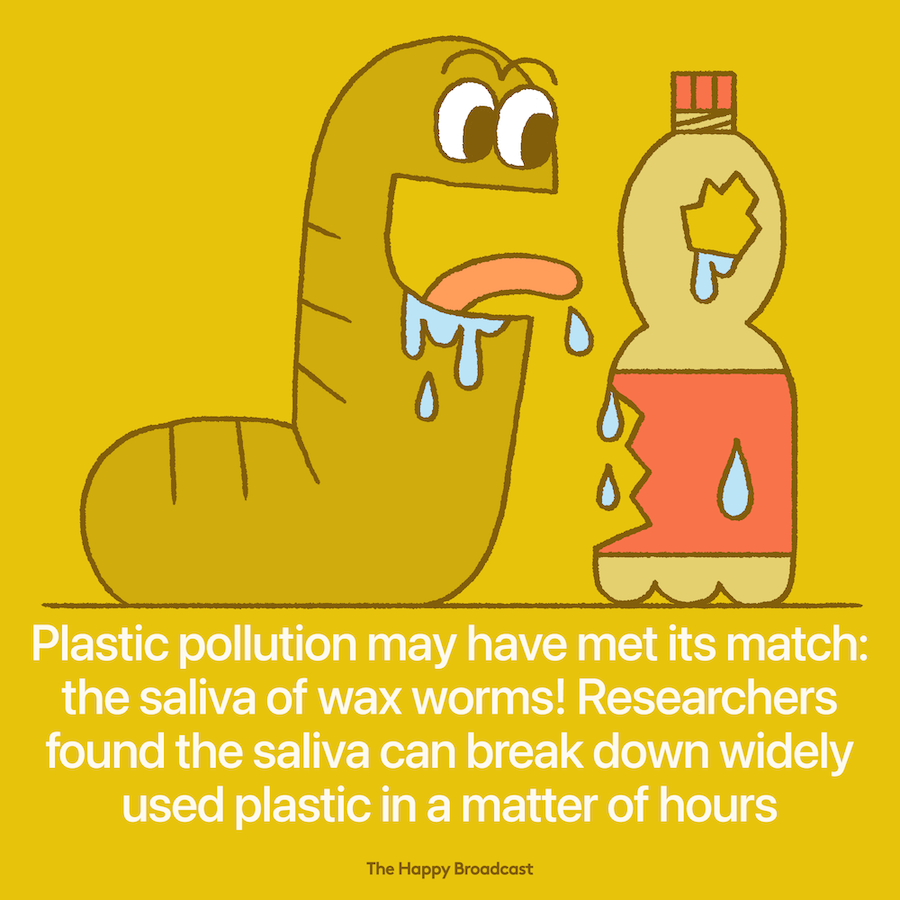
Wax worm saliva could potentially help solving our plastic problem
October 25, 2022
Summary
In a study published in the journal Nature Communications, researchers discovered that enzymes in the saliva of wax worms can readily degrade polyethylene, a common form of plastic used in bags and packaging materials.
Advertisement
Wax worms, or moth larvae that live in the honeycombs of beehives, have two enzymes in their saliva that break down the plastic at room temperature within just a few hours, according to the study.
This introduces new solutions to the world’s plastic pollution problem through “bio-recycling,” in which organisms break down waste materials and create new products from them.
Because wax worms degrade plastic so quickly and without the need for extreme temperature conditions, enzymatic breakdown may be a route to making use of polyethylene waste!
[https://www.smithsonianmag.com/smart-news/wax-worm-saliva-is-the-unlikely-hero-of-fighting-plastic-waste-180980908/](https://www.smithsonianmag.com/smart-news/wax-worm-saliva-is-the-unlikely-hero-of-fighting-plastic-waste-180980908/)